
Finding the right footwear for hiking is harder than it should be. For decades, everyone thought you needed heavy leather boots to survive the woods. But those thick boots often feel like ankle weights by mile five. They trap heat, cause blisters, and take weeks to break in.
Today, many hikers are trading their heavy boots for trail runners. These shoes offer the grip and protection of a boot but feel as light as a gym shoe. They dry fast, breathe well, and let you move much faster. The catch is finding one that actually holds up on rocky trails without falling apart.
We went through the top options and read thousands of real buyer reviews to find out which ones grip wet rocks, which ones save your knees, and which ones give your toes the room they need. Here is our guide to the best trail runners for hiking.
Quick Comparison
| # | Product | Rating | Reviews | Best For | Action |
|---|---|---|---|---|---|
| #1 | Merrell Morphlite | 4.3 | 506 | Road to Trail | View on Amazon |
| #2 | Merrell Nova 4 | 4.6 | 199 | Wide Feet | View on Amazon |
| #3 | Altra Lone Peak 9 | 4.6 | 713 | Zero Drop | View on Amazon |
| #4 | ziitop Quest | 4.2 | 98 | Budget Waterproof | View on Amazon |
| #5 | Saucony Excursion TR16 | 4.3 | 2,210 | Arch Support | View on Amazon |
| #6 | Brooks Ghost Trail | 4.6 | 95 | Joint Protection | View on Amazon |
#1 Best for Road to Trail — Merrell Morphlite

The Merrell Morphlite targets people who split their time between paved paths and dirt trails. If you walk to the trailhead from your house, or if you want one shoe for an active vacation, this model fits the bill.
The smartest feature here is the custom lug pattern. The center of the sole has flat tread for smooth running on roads. The outer edges feature deeper lugs to bite into dirt and mud when you hit the trail. This keeps the shoe feeling fast on concrete but safe on dirt.
Most buyers agree that the comfort and weight are fantastic. People love how the shoe flexes naturally over rocks and roots instead of staying rigid. However, several users note that the shallow tread wears down quickly if you use them heavily on rough pavement.
This shoe shines brightest on a travel vacation. When you only have space in your bag for one pair of shoes to handle morning jogs, town walking, and light hikes, the Morphlite handles all three easily.
Honestly, the flexibility is what stands out most to me. Stiff hiking shoes often cause foot fatigue. These let your foot move naturally. I would not pick these for deep mud or highly technical mountain climbs, but for moderate dirt trails and gravel paths, they offer incredible value.
Compared to the Saucony Excursion, the Morphlite is much lighter and more flexible, though it lacks the deep aggressive grip of the Saucony.
✅ Pros
- Flexes easily over rocks and roots
- Very light on the foot
- Wide outsole helps keep steps balanced
- Clears mud quickly without scrubbing
❌ Cons
- Tread wears down quickly on hard pavement
- Shallow lugs do not bite well in deep mud
💬 What Customers Say
Buyers consistently praise how light and comfortable these shoes feel right out of the box. Many people mention that the wide base keeps their footing stable on uneven ground. The most common complaint is about durability. Because the rubber is soft and the lugs are shallow, heavy users report the tread wearing smooth faster than traditional hiking shoes.
#2 Best for Wide Toes — Merrell Nova 4

The Merrell Nova 4 is built for hikers who need extra room up front. It blends the breathable mesh of a running shoe with a durable rubber outsole designed for extreme trail environments.
The feature that matters most is the wide toe box combined with the FloatPro foam. This setup stops your toes from mashing together on steep downhills, while the foam keeps your feet from feeling bruised by sharp rocks.
Customers rave about the fit. Many buyers with foot pain, wide feet, or arthritis say these shoes provide instant relief. They love the heel support and the thick sole. A few buyers mention that the factory laces are slippery and come untied easily if you do not double-knot them.
These work best on long day hikes where your feet tend to swell. The extra room and soft upper material adapt as your foot changes shape throughout the day.
I really like the flared sole design on this shoe. It looks a bit wide from the top, but that flare gives you serious side-to-side stability when stepping on loose rocks. I would recommend this to anyone who usually gets blisters on their pinky toes from narrow sneakers.
Compared to the Merrell Morphlite, the Nova 4 has much deeper lugs and a wider footprint, making it better for rough trails but slightly clunkier on paved roads.
✅ Pros
- Gives toes plenty of room to spread out
- Flared sole provides extra side-to-side stability
- Soft and stretchy upper material breathes well
- Thick sole protects feet from sharp rocks
❌ Cons
- Included laces tend to slip loose
- The wide base look is not for everyone
💬 What Customers Say
Across the reviews, buyers highlight the exceptional comfort for wide feet. People with toe joint issues say this is one of the few shoes that does not cause them pain. The grip gets high marks for trail use and even warehouse floors. The only minor complaint that pops up involves the slippery laces, which some buyers choose to replace.
#3 Best Zero Drop — Altra Lone Peak 9

The Altra Lone Peak 9 is a legend in the hiking community. It is designed specifically for long-distance hikers and trail runners who want their feet to function as naturally as possible.
The defining feature of this shoe is the zero-drop platform. This means your heel and forefoot sit at the exact same distance from the ground. Combined with the massive foot-shaped toe box, this shoe forces your foot to lay flat and your toes to splay out naturally for balance.
Real buyers absolutely love these shoes for difficult feet. People with wide feet and toe pain call them life savers. Many hikers report doing 100-mile trips with zero blisters. The main thing buyers note is that the zero-drop design takes a little time to get used to if you normally wear shoes with raised heels.
This shoe is perfect for multi-day backpacking trips. When you carry a pack for days, your feet swell and flatten. The Lone Peak gives your feet the room they need to expand without causing friction.
Altra owns the wide toe box category, and it shows here. I love how connected you feel to the trail. The 3.8mm lugs hit the sweet spot for grip without feeling like cleats. I would highly suggest these to anyone tired of squished toes, but ease into them if you have never worn a flat shoe before.
Compared to the Brooks Ghost Trail, the Altra sits much flatter to the ground and offers significantly more room in the toe area.
✅ Pros
- Zero drop design keeps feet flat and natural
- Massive toe box prevents blisters on long hikes
- Grips wet rocks and roots easily
- Dries very quickly after crossing streams
❌ Cons
- Requires an adjustment period for your calves
- Not waterproof for rainy days
💬 What Customers Say
Hikers and runners consistently praise the massive toe box and flat sole. Many buyers say they switched to these after other brands caused hip or knee pain, and they noticed immediate relief. The grip on muddy trails gets great feedback. A few users warn that you must ease into zero-drop shoes, as they use your calf muscles differently than standard sneakers.
#4 Best Budget Waterproof — ziitop Quest
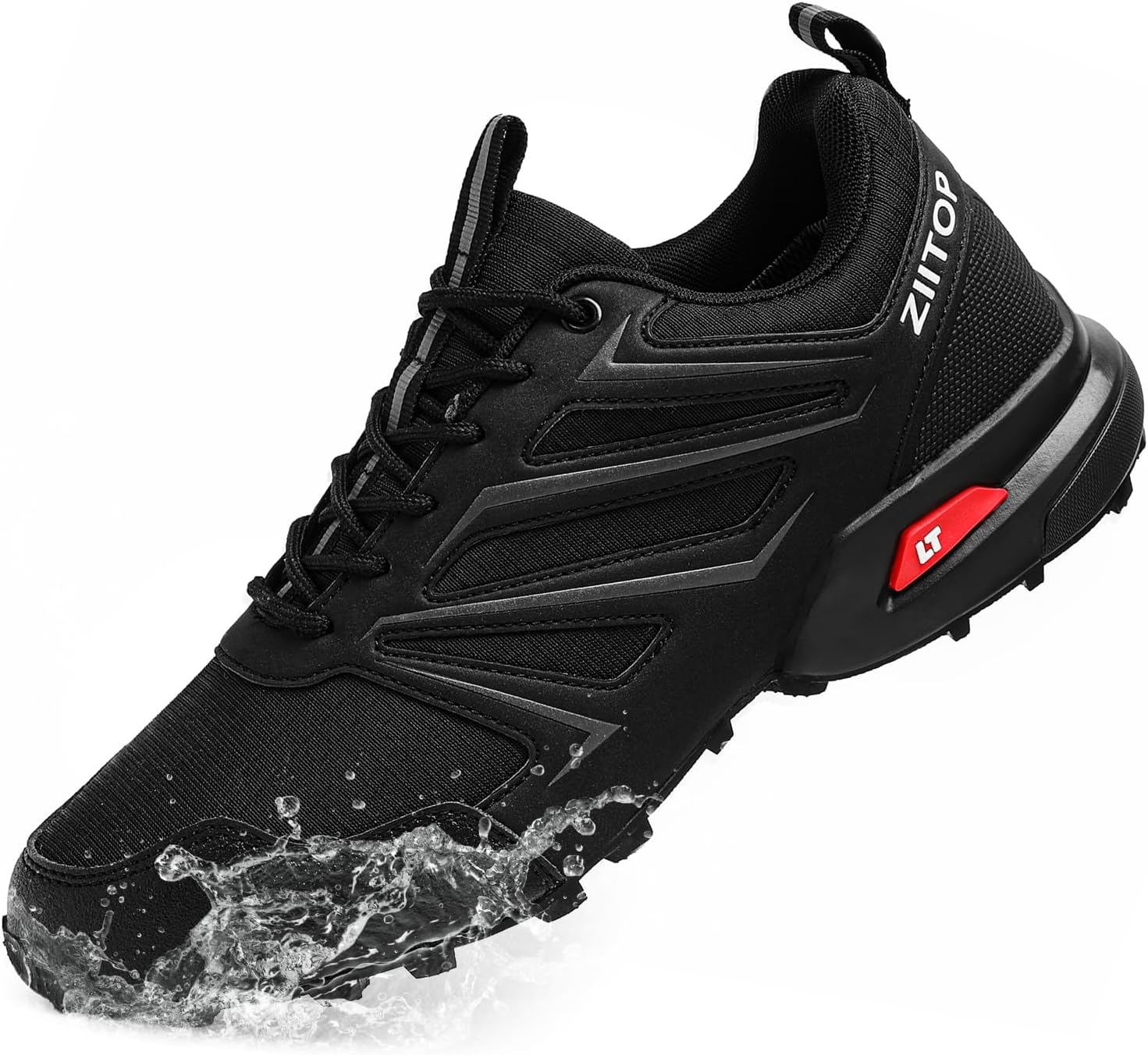
The ziitop Quest is a budget-friendly trail shoe aimed at casual hikers and outdoor workers. It focuses on keeping water out while providing basic EVA cushioning for uneven ground.
The standout feature is the waterproof upper. Finding a shoe at this price that actually stops water is rare. The material blocks morning dew, light snow, and shallow puddles from soaking your socks.
Buyers are mostly shocked by how well the waterproofing works. Several users report wearing them in snow and wet fields for months with completely dry feet. However, a major complaint appears often: the rubber sole is incredibly slippery on smooth, wet surfaces like tile or polished rock.
This shoe works perfectly for walking the dog through wet morning grass or doing light trail walks in damp weather. It keeps the cold moisture away from your toes without the heavy feel of rubber rain boots.
I think this shoe is a great deal if you use it in the right environment. The waterproofing punches way above its price class. But I would not wear these on wet rocks or near rocky streams. The lack of slip resistance on smooth surfaces makes them strictly a dirt and grass shoe.
Compared to the Saucony Excursion, the ziitop actually keeps water out better, but the Saucony offers far superior grip and arch support.
✅ Pros
- Keeps feet dry in wet grass and snow
- Very affordable price point
- Lightweight feel for a waterproof shoe
❌ Cons
- Extremely slippery on wet tile or smooth rock
- Included insoles tend to slide backward
- Can feel tight around the toes
💬 What Customers Say
Customers are very happy with the waterproof performance, often comparing it favorably to much more expensive brands. Many buyers use them for outdoor work in wet grass or snow. The biggest issue mentioned in reviews is the traction. Users warn that while the grip is fine on dirt, the shoes slide easily on wet, smooth surfaces like tile floors or flat rocks.
#5 Best Arch Support — Saucony Excursion TR16

The Saucony Excursion TR16 is a rugged trail runner built for people who need firm support. It is designed to handle rough outdoor conditions while keeping your feet stable.
The most important feature here is the Versarun cushioning combined with carbon-rubber lugs. The foam provides a firm, supportive base under your arch, while the stiff rubber lugs act like teeth, biting into loose dirt and gravel to stop you from sliding backward.
Reviewers love the sturdy feel and the arch support. Many buyers with back or hip pain say these shoes help keep their body aligned on long walks. However, several buyers point out that despite some product descriptions mentioning GORE-TEX, the standard version of this shoe is not waterproof at all.
This shoe shines on rocky, uneven hiking trails. The stiffer sole acts like a shield, so you do not feel every sharp rock poking into the bottom of your foot.
I really like how this shoe bridges the gap between a running shoe and a hiking boot. It is stiffer than most trail runners, which is exactly what you want if you are carrying a heavy backpack. Just be aware that if you walk through wet grass, your socks will get wet.
Compared to the Merrell Nova 4, the Saucony feels firmer underfoot and offers more pronounced arch support, though it has less stretch in the upper.
✅ Pros
- Thick cushioning provides excellent arch support
- Carbon rubber lugs bite hard into loose dirt
- Leaves enough room to add custom inserts
- Sturdy build protects feet from sharp rocks
❌ Cons
- Not waterproof at all in wet grass
- Stiffer feel than most flexible trail runners
💬 What Customers Say
Buyers frequently mention how much these shoes help with joint and back pain thanks to the strong arch support. People love the aggressive grip on dirt and gravel trails. The main negative pattern in the reviews is the lack of water resistance. Buyers warn that walking through damp grass will quickly result in wet socks.
#6 Best for Knee Comfort — Brooks Ghost Trail
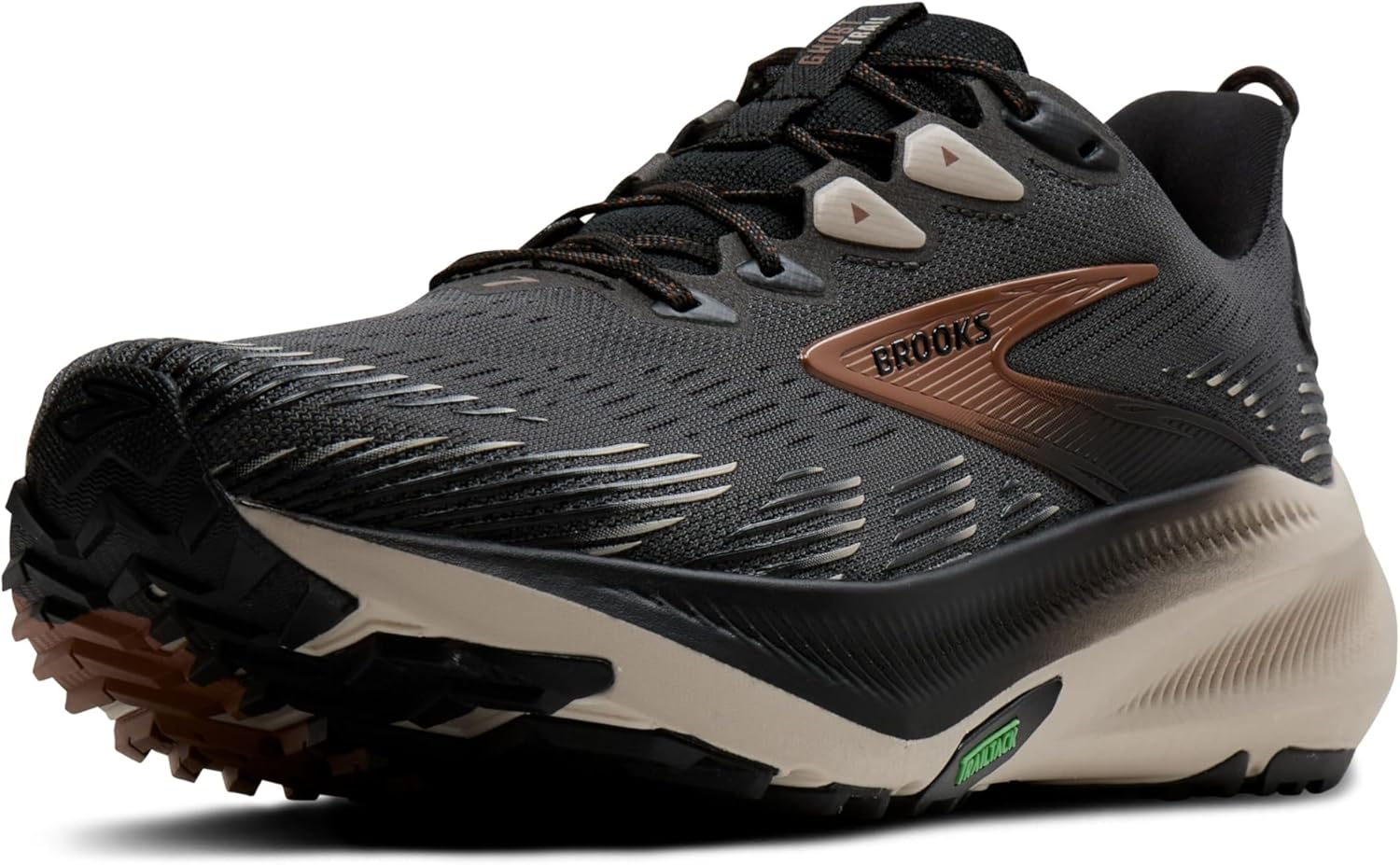
The Brooks Ghost Trail takes one of the most popular road running shoes in the world and adds off-road traction. It is built for runners and hikers who want maximum shock absorption on hard terrain.
The magic of this shoe lives in the nitrogen-infused DNA LOFT v3 midsole. This foam is incredibly soft and bouncy. It absorbs the harsh impact of stepping on hard-packed dirt and rocks, which stops that shock from traveling up into your knees and hips.
Buyers are thrilled with the cushioning. Older runners and hikers specifically mention how these shoes save their joints. They love how light the shoes feel despite the thick foam. A few users note that the factory insoles feel a bit flat and suggest swapping them out for better arch support.
These are perfect for long miles on hard, dry trails. If you hike on baked dirt or rocky paths that usually leave your legs aching the next day, this foam takes the beating instead of your body.
The shock absorption on these is fantastic. The nitrogen foam makes a massive difference on hard impacts. It feels plush but stays stable on uneven ground. I would highly suggest these to anyone dealing with knee pain who refuses to quit hiking.
Compared to the Altra Lone Peak, the Brooks Ghost has a much thicker, softer heel and a more traditional drop, making it better for heel-strikers.
✅ Pros
- Nitrogen foam absorbs hard impacts easily
- Very light weight for the amount of cushion
- Transitions well from paved roads to dirt trails
- Upper mesh breathes well on hot days
❌ Cons
- Factory insoles feel flat and may need replacing
- Wide sizes run a bit narrow compared to other brands
💬 What Customers Say
Customer reviews focus heavily on joint relief. Many buyers over the age of 50 say these shoes allow them to keep running and hiking without knee pain the next day. The traction gets good marks for dry and wet rocks. Some buyers with very wide feet mention that the wide version still feels a bit snug across the toes.
Frequently Asked Questions
Do trail runners provide enough ankle support for hiking?
How long do trail runners last compared to hiking boots?
Should I buy waterproof trail runners?
What does zero-drop mean?
Conclusion
Switching from heavy boots to trail runners can completely change how your body feels after a long hike. For most hikers, the Altra Lone Peak 9 is the best overall choice. The massive toe box and flat sole allow your foot to work naturally, preventing blisters and fatigue on long days.
If you need more cushion to protect older joints, the Brooks Ghost Trail is an excellent alternative. The nitrogen foam eats up hard impacts and keeps your knees happy, making it a great pick for hard-packed dirt and rocky paths. Pick the shoe that matches your feet, and enjoy the lighter step.