
Sleeping in the cold backcountry tests your mind and your gear. Many sleeping bags claim to handle freezing temperatures, but those numbers often represent survival limits, not comfort limits. Finding out your bag cannot handle the cold at two in the morning is a miserable experience.
To help you avoid freezing nights, we looked closely at the top winter options. We skipped the marketing claims and dug into actual materials, insulation types, and thousands of real field tests. The right bag needs to balance warmth, weight, and packability so you can actually carry it up the mountain.
We read through customer reviews to see how these bags perform when the temperature drops. Below, you will find four reliable options that fit different camping styles, from lightweight down bags for long hikes to heavy-duty canvas models for base camps.
Quick Comparison
| # | Product | Rating | Reviews | Best For | Action |
|---|---|---|---|---|---|
| #1 | 1TG Tactical Bag | 4.5 | 135 | Mild Winters | View on Amazon |
| #2 | MHTD Canvas Bag | 4.2 | 40 | Car Camping | View on Amazon |
| #3 | Kelty Cosmic 20 | 4.7 | 212 | Backpacking | View on Amazon |
| #4 | Teton LEEF Bag | 4.5 | 4621 | Extreme Cold | View on Amazon |
#1 Best for Mild Winters — 1TG Tactical Bag

This mummy bag fits adults up to 6 feet 1 inch tall. It uses a tough nylon outer shell and hollow-fiber synthetic insulation to keep you warm in mild winter conditions.
The diagonal zipper makes the biggest difference here. Most bags use a straight side zipper that requires awkward arm angles to open from the inside. This zipper runs across your chest, making it easy to open or close without twisting your body.
Buyers frequently mention how small this bag packs down in its compression sack. Parents buying it for scout trips note it keeps kids warm down to 30 degrees. A few users mentioned the material feels a bit thin, so you will want a good sleeping pad underneath.
This bag works best for late fall or early winter trips where temperatures hover just above freezing. The light weight makes it easy to carry on short weekend backpacking trips.
Honestly, the footbox design stands out the most to me. Many mummy bags crush your feet together, but this one leaves enough room for your feet to rest naturally. I would suggest this bag to anyone who hates feeling trapped, but I would look for a thicker bag if you expect deep snow or sub-zero nights.
✅ Pros
- Zipper is easy to reach from inside
- Leaves room for your feet to move
- Packs down small for travel
- Blocks wind around the neck
❌ Cons
- Rated only down to 25 degrees
- Material feels thin against the ground
💬 What Customers Say
Most buyers agree that this bag offers great value and packs down much smaller than expected. Parents love it for cold weather scout trips. The roomy foot area gets a lot of praise, though a few people note they would not push it past the 30-degree mark.
#2 Best for Car Camping — MHTD Canvas Bag

This heavy-duty bag uses a cotton canvas outer shell instead of thin nylon. It features a roomy tunnel shape and synthetic insulation to trap heat.
The canvas shell changes the entire feel of this bag. It resists moisture, handles rough use, and feels much more like a real bed than a slippery hiking bag. This thick material cuts out cold drafts completely.
Customers love the durability and the large hood that keeps pillows off the dirt. However, many buyers warn that the 14-degree rating is a stretch. Most people felt comfortable around 40 degrees but got cold when temperatures dropped near freezing.
Since this bag weighs over 5 pounds and takes up a lot of space, it shines brightest on road trips, camper van outings, or short walks from the car to the campsite.
I really like the tough exterior on this bag. You do not have to worry about a stray branch tearing a hole in it. I would tell car campers to grab this for comfort, but I would tell backpackers to skip it. It is simply too heavy and bulky to carry up a mountain trail for miles.
✅ Pros
- Canvas shell resists tears and rough use
- Hood keeps your head off the ground
- Tunnel shape offers plenty of room
- Heavy zippers pull smoothly
❌ Cons
- Very heavy for long hiking trips
- Temperature rating is overly optimistic
- Shiny interior lining can feel clammy
💬 What Customers Say
Across the reviews, people praise the tough canvas material and the smooth zippers. Buyers appreciate the wide shape that lets them turn over easily. The biggest complaint is the temperature rating, with many users saying they felt chilly when the weather dropped below 40 degrees.
#3 Best for Backpacking — Kelty Cosmic 20
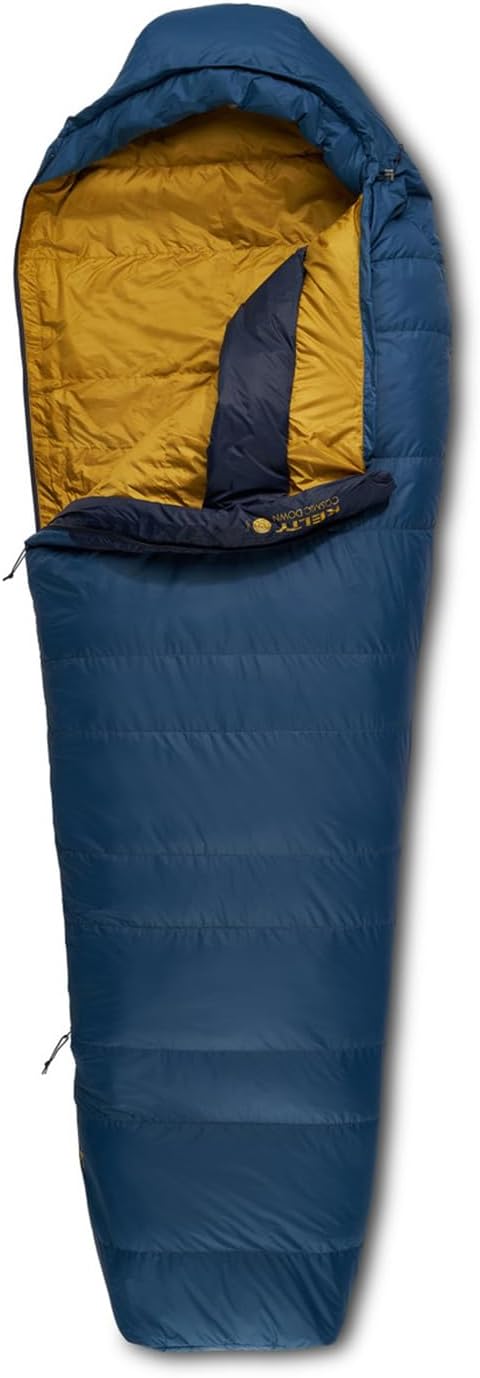
The Kelty Cosmic uses 550-fill power down to trap heat. It weighs just 2 pounds 6 ounces and features a recycled nylon shell treated to repel water.
The real down insulation gives this bag a huge advantage on the trail. Down traps more heat per ounce than synthetic materials, meaning you stay warmer while carrying less weight on your back.
Hikers who use this bag report staying warm in temperatures dropping into the high 20s. They love how small it rolls up inside a backpack. The most common complaint comes from larger men, who find the shoulder area very tight and hard to zip up.
This bag is ideal for multi-day backpacking trips where every ounce matters. It easily fits into a 50-liter backpack with plenty of room left for food and clothes.
Honestly, finding a real down sleeping bag with this build quality usually costs a lot more. The trapezoid baffles keep the down from shifting around, which prevents cold spots. I would fully recommend this to average-sized hikers, but barrel-chested campers should definitely look for a wider option.
✅ Pros
- Real down insulation provides excellent warmth
- Weighs less than three pounds
- Packs down very small
- Outer shell repels light rain
❌ Cons
- Very tight fit around the shoulders
- Lacks a two-way zipper for venting heat
💬 What Customers Say
Backpackers who use this daily report that it holds heat incredibly well and packs down easily. Many buyers say it outshines other bags in its class for warmth. However, a common complaint is the snug mummy fit, especially for people with broad shoulders.
#4 Best for Extreme Cold — Teton LEEF Bag

This thick synthetic mummy bag comes in multiple temperature ratings, including a zero-degree option. It features a contoured shape with extra width to give you room to move.
The extreme thickness of the insulation is what keeps you alive in freezing weather. Even when temperatures drop below zero, the thick layers trap your body heat inside and block out the cold air.
Buyers who took this bag into negative temperatures were amazed by how warm they stayed. Many reviewers note that it feels like sleeping in a warm spa. The main issue people mention is the zipper, which catches on the fabric easily and requires a slow, careful pull.
This bag belongs on serious winter camping trips, hunting excursions, or boundary water trips where the weather gets dangerously cold.
I am genuinely impressed by the real-world testing from buyers on this bag. Surviving sub-zero nights in a synthetic bag is a big deal. I would highly suggest this to anyone facing bitter cold. Just keep in mind that it takes up a massive amount of space in a backpack, even inside its compression sack.
✅ Pros
- Keeps you warm in extreme freezing temperatures
- Offers extra room to roll over
- Outer fabric wipes clean easily
- Thick hood blocks cold air
❌ Cons
- Takes up a large amount of backpack space
- Zipper catches on the fabric frequently
💬 What Customers Say
Campers who braved negative temperatures say this bag kept them completely warm and safe. Buyers love the soft interior and the extra shoulder room. However, almost everyone agrees that the zipper is frustrating and snags on the fabric if you pull it too fast.
Frequently Asked Questions
Do I need a sleeping pad with a winter bag?
What is the difference between down and synthetic fill?
How do I stop cold air from getting in my sleeping bag?
Can I wash my winter sleeping bag?
Conclusion
Finding the right bag makes the difference between a great trip and a miserable, freezing night. The Teton LEEF Bag stands out as the best overall choice for extreme cold, offering incredible warmth for serious winter conditions.
If you plan to carry your gear for miles, the Kelty Cosmic 20 is a fantastic alternative. Its lightweight down insulation will keep you warm without breaking your back on the trail. Pick the one that fits your camping style, and you will sleep well.